
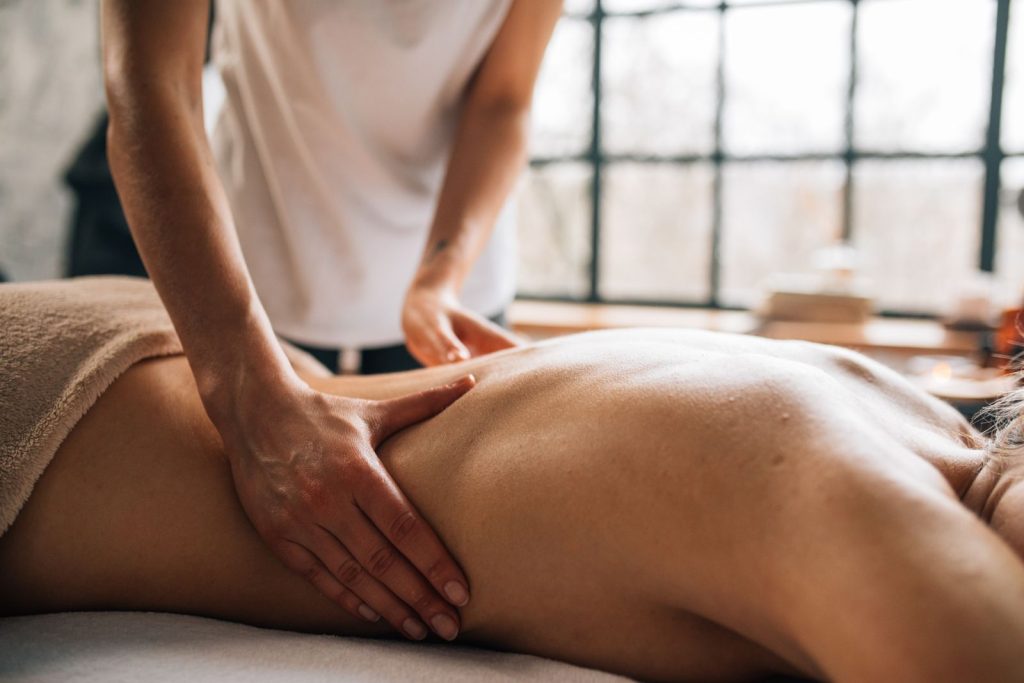
“Which massage is best?” is really a question about your goal, not the treatment itself. A massage chosen for stress relief looks different from one chosen for muscle recovery after a hike, and a treatment picked for circulation issues works on a different principle again. Too many guests book whatever sounds most familiar — usually Balinese — without considering whether it actually matches what they’re trying to fix. This guide breaks massage benefits down by goal, explains the mechanism behind each claim in plain terms, and helps you match your booking to what you actually need instead of picking at random.
Stress Relief and Mental Wellbeing
Slower, lighter-pressure treatments do more for the nervous system than for specific muscles. Aromatherapy massage is built specifically for this — gentle strokes paired with calming essential oils that work on scent as well as touch. Balinese massage is a close second, combining relaxation with enough physical relief to leave you both calmer and looser.
Muscle Pain and Tension Relief
For actual muscle knots and chronic tightness, firmer, more targeted techniques matter more than a soothing atmosphere. Deep Tissue massage is the most direct option, using slow, sustained pressure to reach deeper tissue layers. Traditional massage works well for guests who want firmer pressure without going to full deep-tissue intensity, and Hot Stone massage is worth considering if you want deep relief but find very firm manual pressure uncomfortable — the heat does some of the work for you.
Recovery for Active Travelers
If your days involve surfing, hiking a volcano at sunrise, or long walking tours, recovery-focused massage should target the specific muscle groups you’ve stressed. Sport massage is built exactly for this, combining firmer pressure with stretching aimed at calves, hamstrings, shoulders and lower back — the areas most affected by physical activity. Reflexology is a good lighter add-on specifically for tired feet after a day of walking.
Circulation and Swelling
Two treatments specifically target circulation rather than muscle tension. Lymphatic Drainage massage uses very light, rhythmic strokes to support the body’s natural lymph flow — useful for mild swelling or post-flight puffiness. Slimming massage uses firmer, more rhythmic strokes aimed at stimulating circulation and reducing the appearance of fluid retention, generally as part of a short course of several sessions rather than a single treatment.
Matching Your Goal to a Treatment
As a quick reference: choose Aromatherapy or Balinese for stress, Deep Tissue or Traditional for chronic muscle pain, Hot Stone if you want deep relief with less intensity, Sport massage for activity recovery, and Lymphatic Drainage or Slimming massage for circulation-related goals. If you’re pregnant, always book our dedicated Pregnancy massage rather than any of the above, since standard techniques and pressure points aren’t appropriate during pregnancy regardless of how relaxing they normally are.
What Massage Can’t Do
It’s worth being realistic about limitations. Massage is not a substitute for medical treatment, and it won’t resolve an underlying medical condition, a structural injury, or a diagnosed illness — it works on soft tissue, circulation and the nervous system, and its effects are usually most noticeable for stress, general muscle tension, and short-term recovery rather than as a cure for anything more serious. If you have a persistent pain that isn’t improving with rest and regular massage, that’s a sign to see a doctor rather than book another session hoping for a different result. See our Disclaimer for more detail on this distinction.
Getting the Most Out of a Single Session
A few simple things improve results regardless of which treatment you choose: tell your therapist specifically what you want addressed rather than staying quiet and hoping they guess correctly, drink water afterward to help with circulation, and avoid scheduling anything strenuous immediately after a firm-pressure treatment like Deep Tissue or Sport massage. If a particular area needs more attention than the rest of your body, say so at the start — most of our treatments can be weighted toward one area within the same booked duration.
Can one massage session fix chronic pain permanently?
A single session typically provides temporary relief. For chronic, long-standing pain, a short course of regular sessions — combined with any treatment your doctor recommends — tends to produce more lasting results than a one-off booking.
Is it normal to feel sore the day after a massage?
Mild soreness after firmer treatments like Deep Tissue or Sport massage is normal and usually fades within a day, similar to post-exercise soreness. Sharp or lasting pain is not normal — contact us if that happens.
How often should I book a massage while I'm in Bali?
There’s no fixed rule, but many guests on a week-long trip book two to three sessions spaced a few days apart, using a relaxation-focused treatment early in the trip and a recovery-focused one after more active days.