
Balinese and Thai massage are two of the most requested treatments on our menu, and guests often ask which one they should book first — especially first-time visitors who’ve only ever had a generic “Bali massage” without realizing how many distinct styles fall under that label. They’re both full-body treatments with a long history behind them, but the techniques, feel, and even what you wear during the session are genuinely different. Here’s a clear, practical comparison to help you choose with confidence rather than picking a name at random off a spa menu.
Balinese Massage at a Glance
Balinese massage is performed with warm aromatherapy oil, using long, flowing strokes combined with acupressure and gentle stretching. Pressure moves between firm and gentle within the same session, so you’ll feel both soothing, glide-based strokes and firmer targeted work on tighter areas. You lie on a massage table or mat, undressed to your comfort level and draped with towels, while the therapist works with their hands and forearms across your back, legs, arms and shoulders.
Thai Massage at a Glance
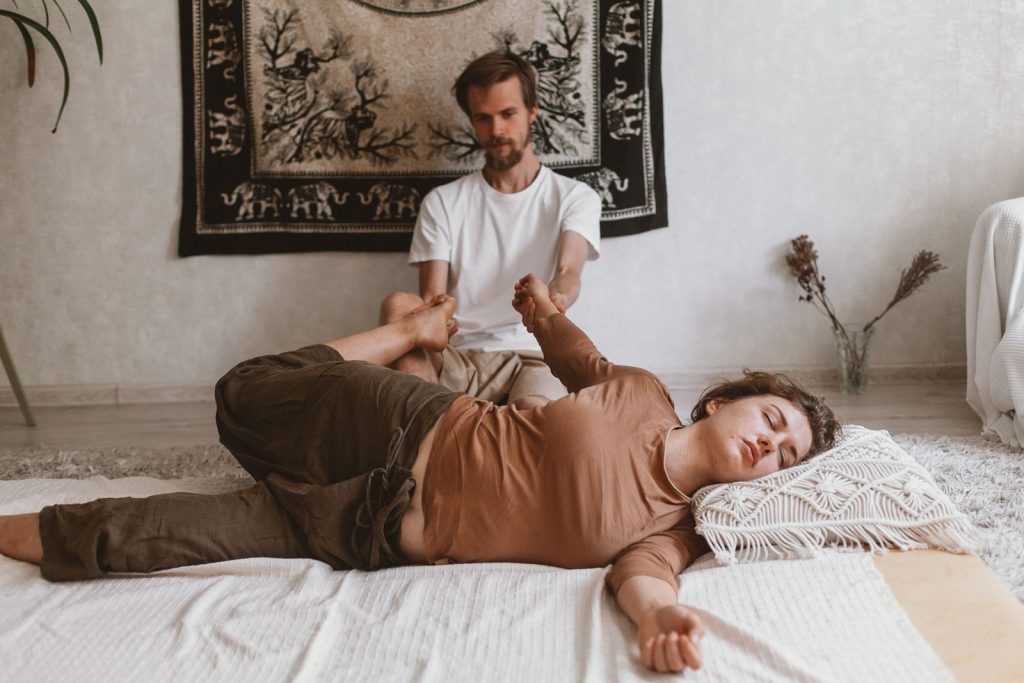
Thai massage is performed without any oil, over loose, comfortable clothing. Instead of gliding strokes, your therapist uses rhythmic compression combined with assisted stretching — gently guiding your limbs and body through positions similar to passive yoga. Rather than lying still throughout, you’ll be moved into a sequence of stretches and holds, with your therapist using their body weight as well as their hands to apply compression along muscle lines.
Key Differences
The most obvious difference is oil versus no oil, and undressed versus clothed. Beyond that: Balinese massage is generally more passive — you relax while the therapist works — while Thai massage actively moves your body through stretches, which can feel energizing rather than purely sedating. Balinese massage tends to focus on muscle tissue directly; Thai massage focuses as much on joints and flexibility as on muscles. Session pacing also differs: Balinese massage flows in long, continuous strokes from one area to the next, while Thai massage moves in a more structured sequence, typically starting at the feet and working upward.
Which Should You Choose?
If your goal is pure relaxation and you want to lie back and switch off, Balinese massage is the better fit. If you want to leave feeling looser and more mobile — particularly useful before or after a long flight, a hike, or a surf session — Thai massage often delivers more noticeable results for flexibility. Guests who dislike being touched with oil, or who are simply more comfortable staying clothed throughout, also tend to prefer Thai massage. If you’re choosing based on a specific area of tightness rather than a general goal, Balinese massage’s oil-based strokes are usually more effective for surface-level muscle tension, while Thai massage’s stretching is more effective for joint stiffness.
Can You Try Both?
Many guests book one on one day of their trip and the other later in the stay, specifically to compare. There’s no rule against trying both — they’re different enough that neither replaces the other, and booking a longer stay in Bali is a good opportunity to experience the contrast for yourself. Some guests even combine elements of both across a longer, 120-minute session; ask us when booking if you’d like to structure a session this way.
What to Wear and Bring
For Balinese massage, you don’t need to bring anything specific — towels and draping are provided, and you undress to whatever level you’re comfortable with underneath. For Thai massage, loose, breathable clothing works best; think of what you’d wear to a yoga class rather than everyday outfits. If you don’t have suitable clothing on hand, mention it when booking and we can advise on alternatives, or you can simply wear light, stretchy sleepwear if that’s what’s available.
Booking Tip for Undecided Guests
If you genuinely can’t decide between the two, book the treatment that matches how you feel right now rather than how you think you should feel. If you’re wound up and just want to switch off, choose Balinese. If you feel physically stiff and restless rather than mentally drained, Thai massage will likely feel more satisfying. There’s no wrong choice between two well-established, proven techniques — only a better or worse match for your mood and body on that particular day.
Is Thai massage more painful than Balinese massage?
Not necessarily — pressure in both styles can be adjusted. Thai massage can feel more intense during a deep stretch, but your therapist never forces a stretch beyond your comfortable range of motion, and you can ask them to ease off at any point.
Which is better for lower back pain?
Both can help, but Thai massage’s stretching component often gives more noticeable relief for stiffness-related back pain, while Balinese massage is better for general tension and stress-related tightness rather than joint stiffness specifically.
Do I need to be flexible already to get a good Thai massage?
No. Your therapist works within your current range of motion and adjusts each stretch to what feels comfortable for you — flexibility isn’t a requirement to book, and many guests find their range of motion improves gradually with repeated sessions.